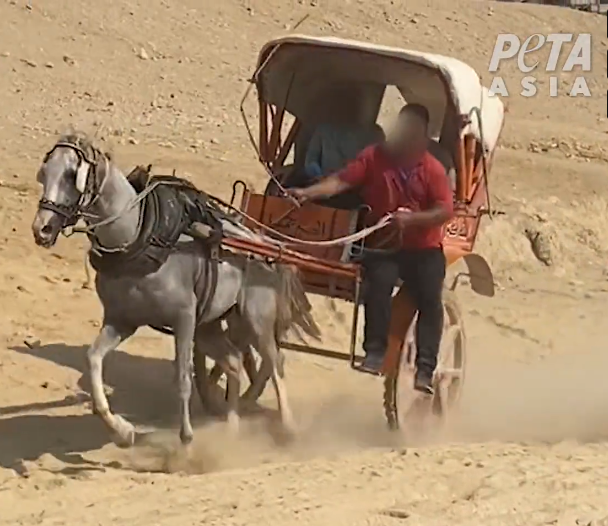
(This is the translated version of the Chinese article published on 9 Feb 2026. The above photo by PETA, showing horses ridden at Egyptian tourist sites often whipped by handlers to urge them to go forward.)
While the festive vibe is centring around the strength and bravery of equine upon the coming of the Chinese New Year of the Horse, many horses and camels are in reality under bitter abuse, particularly those at the Egyptian tourist sites bringing fun to tourists in riding activities, with their lives in tears and blood exposed by animal rights groups.
Horses and camels ridden by tourists – frequently whipped, exposed to the scorching sun, starved and dead bodies dumped recklessly
The international animal rights group, People for the Ethical Treatment of Animals (PETA) is calling for attention to the exploitation and suffering of horses worldwide when they are used in the tourism industry and horse-racing activities to make profits for humans. PETA particularly points to the situation in Egypt, stating that in 2019, the group conducted investigations at Egypt’s top tourist sites, including the famous pyramids of Giza and the royal tombs of Luxor, discovering cruel treatment of horses and camels ridden by tourists.
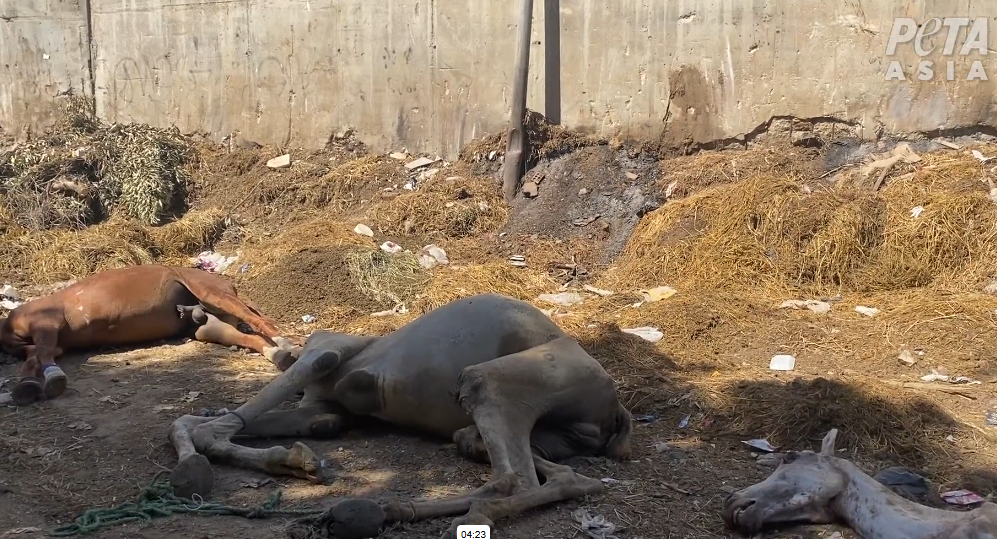
The animals were found routinely whipped as being forced to go forward and enduring prolonged exposure to the scorching sun for tourists to take photos. Most were just skin and bone, lacking sufficient food, with many scavenging for food in garbage dumps. Their injuries were not properly cared for, and their stables were dark, unsanitary and swarming with flies. When they collapsed from exhaustion, the staff would use various methods to force them to stand up, until they died from injuries or illnesses. Their bodies were then abandoned in open areas behind the ticket booth at pyramid sites.
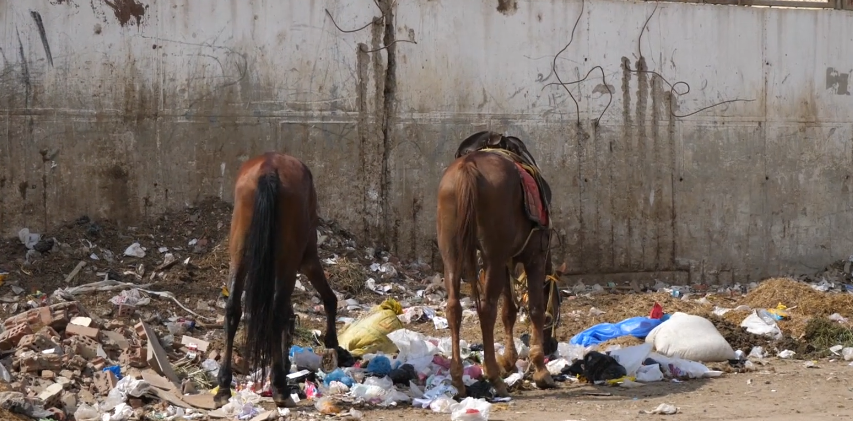
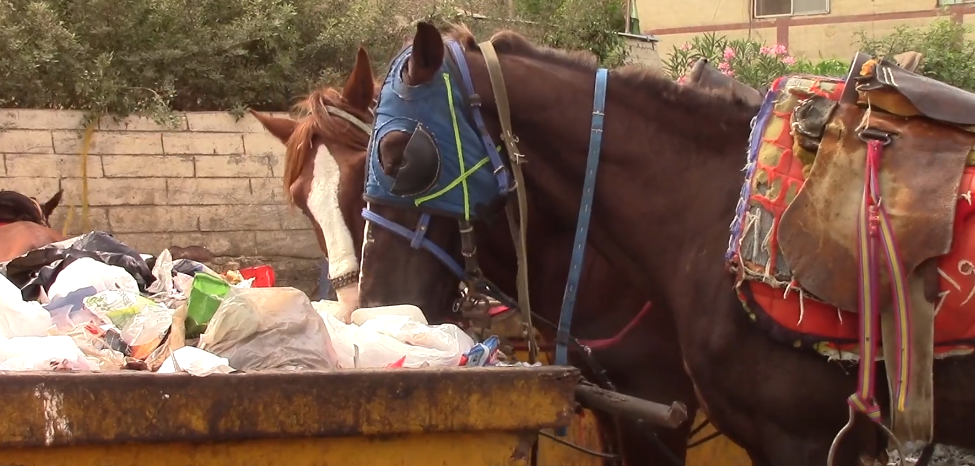
(Horses ridden in Egypt’s tourist sites often go hungry, frequently scavenging for food in garbage dumps. Photo source: PETA)
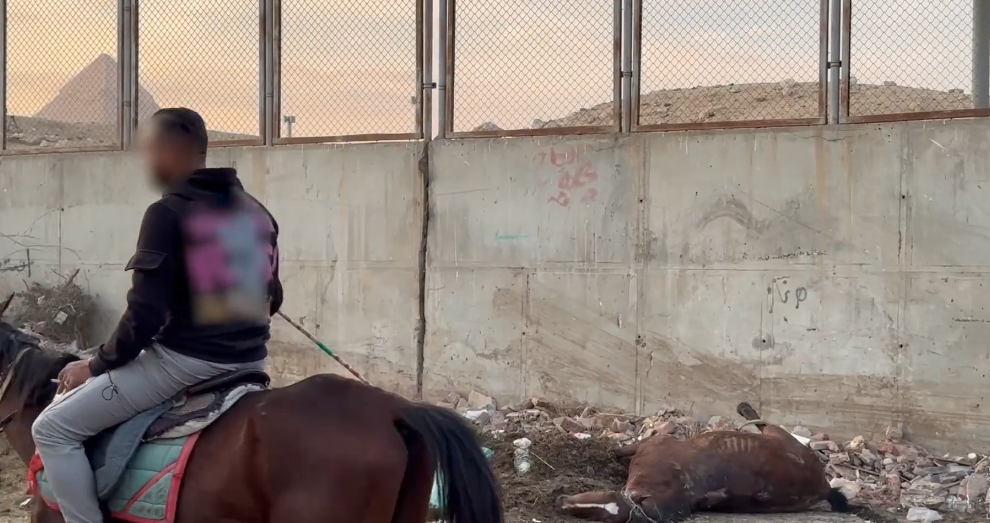
(After the working horses die from overwork and injuries, they are not buried with dignity; instead, their bodies are often seen to be abandoned in open spaces, with passersby seemingly indifferent. Photo source: PETA)
Besides horses, camels are in the same plight. PETA found that in an Egypt’s notorious camel selling market in Birqash, camels are beaten with sticks and fists until blood is pooling on their face. They are sold to work at tourist attractions, and some are sold to slaughterhouses where the slaughter is brutal, involving throat-cutting and painful deaths.
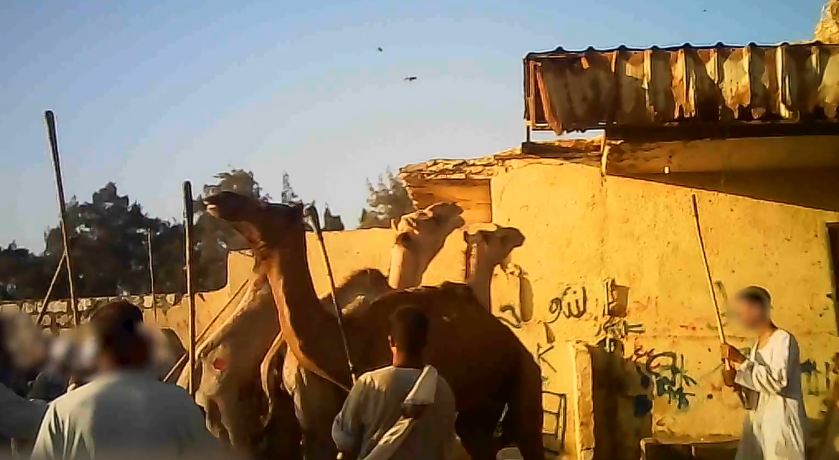
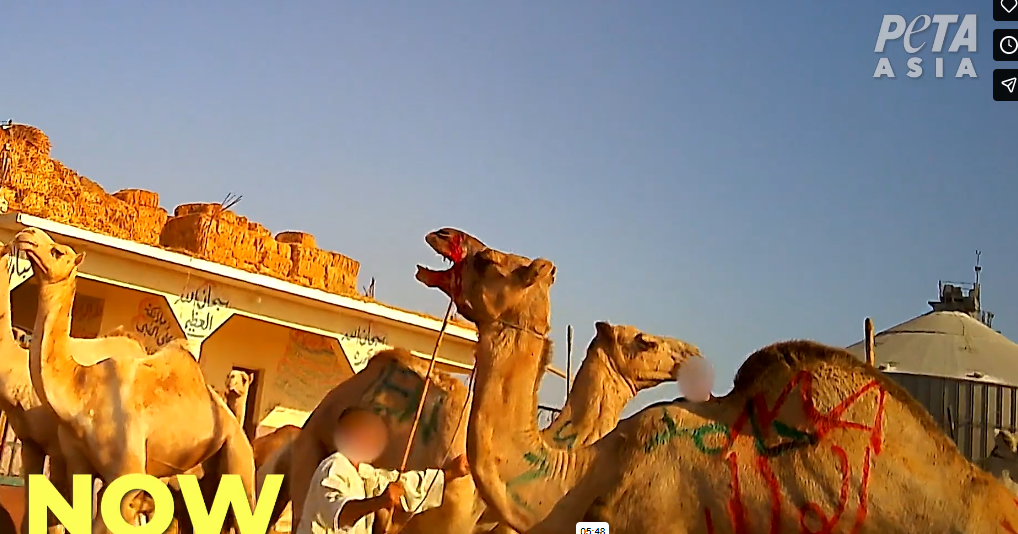
(Egyptian Camels sent to the Birqash market for sale are often beaten with sticks along the way until they bleed profusely. Photo source: PETA and screenshot from a PETA video)
PETA said that after the situation was exposed in 2019, the Egyptian Ministry of Tourism and Antiquities promised improvement, but little progress was made between 2023 and 2024. Then, on November 1st last year, with the opening of the Grand Egyptian Museum, PETA discovered that horse and camel corpses were scattered throughout a secret cemetery outside the museum.
PETA said that the organisation has written to the Egyptian President Abdel Fattah el-Sisi, demanding a complete ban on the use of horses and camels for tourist entertainment or transportation at the pyramids and other tourist sites, and that a portion of museum revenue be used to establish animal sanctuaries so that animals suffering from tourism can have a chance to renew their lives.
The Virtue Online Journal sent an email to the Egyptian Ministry of Tourism and Antiquities some days ago to inquire about the issue, but has yet to receive a reply by the time of publication of this article.
Egyptian government’s promise for improvement doubted as whitewash tricks while a tourist photographing animal abuse scenes bombarded by authorities
PETA’s campaigner and social media coordinator in Hong Kong, Jackie Tang, said that although the Egyptian government in October 2024 launched the National Programme for the Care and Protection of Horses, Camels, and Pets at Archaeological Sites to provide working animals with permanent veterinary care, it is too early to say whether it will be effective or just a whitewash trick to resist public pressure.
PETA in another published news article mentioned the response from the Egypt authority on the issue, saying that in correspondence with PETA, a spokesperson from the Ministry of Tourism and Antiquities said that the goal of any improvements was to benefit tourists, not the abused animals. The news also mentioned a tourist photographing animal abuse scenes at a pyramid site but were obstructed, surrounded by local police and the ministry’s officials, who demanded deletion of the photos, and even forcibly seized the photo data cards from the phone.
PETA’s protest in Hong Kong to call on tourists to boycott Egypt’s local riding activities
Mr Tang stated that the only way to ensure the protection of the animals is to completely ban their use at the pyramids. On 4 February, just about two weeks before the Chinese New Year celebrating the Year of the Horse as their zodiac custom, PETA in Hong Kong staged a protest outside the Egyptian Consulate in Causeway Bay’s Sino Plaza. The protesters wore cloth costumes resembling horses and held signs that read: “EGYPT: Make This The Year of Horses, Ban Cruel Rides Now!” (Photo below)
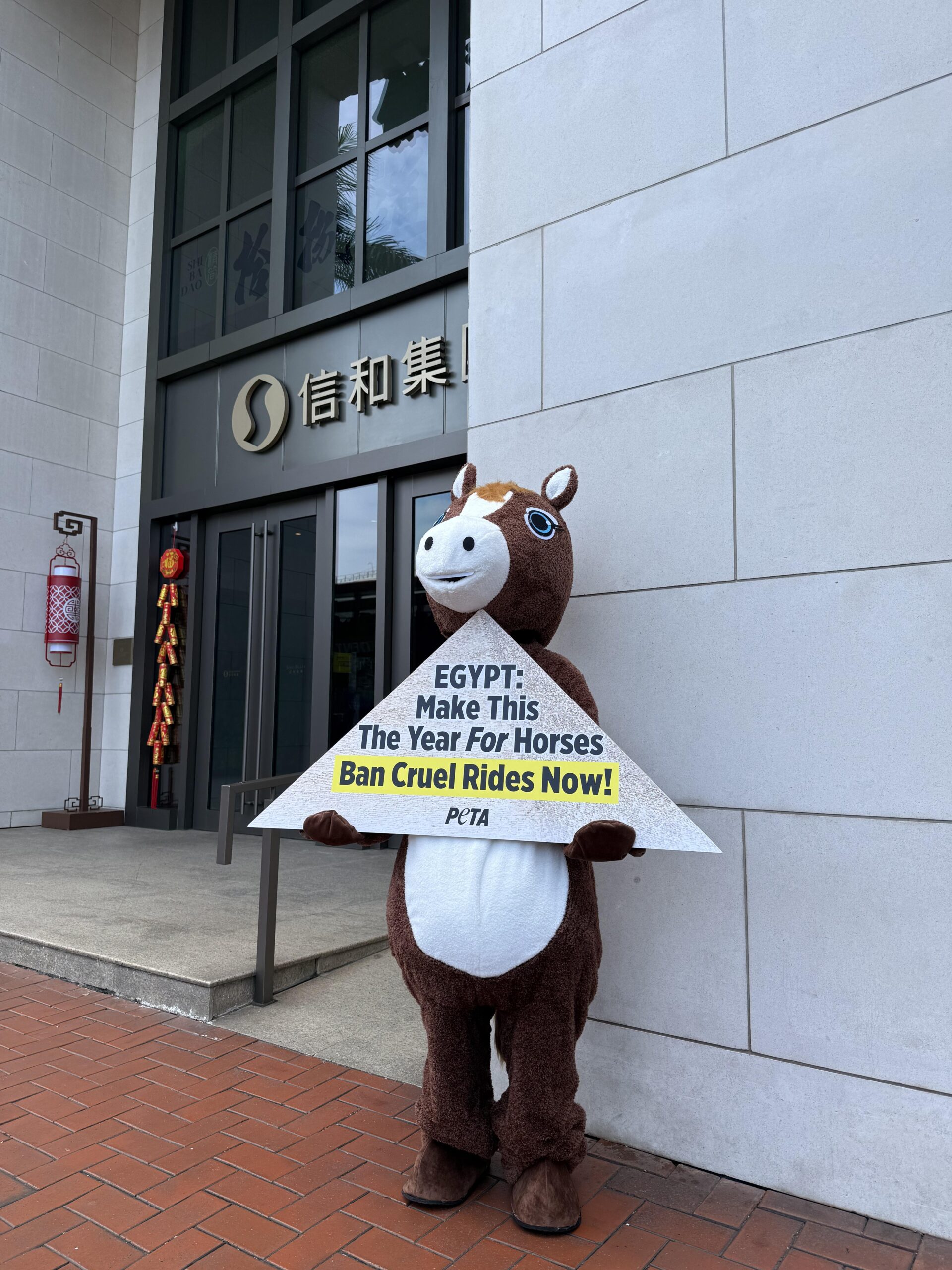
They called on tourists to boycott horse and camel riding activities while traveling in Egypt. PETA said that after their advocacy has been launched over the past few years, more than 50 travel companies, including Airbnb, Marriott Bonvoy, British Airways Holidays, Abercrombie & Kent and TCS World Travel, have stopped the sale of tickets for camel riding tours in front of the Giza Pyramids.
Egyptian animal rights groups: Equine animals widely used and abused in the local economy
Egyptian animal rights groups have long been concerned about the mistreatment of working animals like horses and camels in the country. Society for Protection of Animal Rights in Egypt (SPARE) points out that Egypt’s economy relies heavily on animals’ services, primarily in tourism, entertainment and agriculture. Donkeys and horses are often the sole source of income for farmers, mainly serving transportation. They carry extremely heavy loads such as bricks, mortar and sugar cane. Some horses are sold to tourist sites for riding activities to make money. These working equines suffer from chronic overloading, excessive working hours, frequent abuse and starvation, and the lack of proper medical care for their injuries or illnesses.
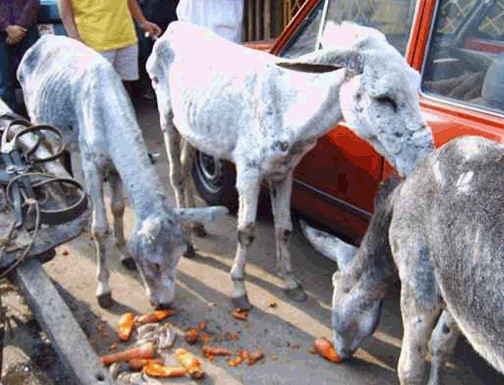
(When the Egyptian animal protection organisation SPARE saw the local donkeys used for transportation in skin and bone, they immediately gave them food. Photo source: SPARE)
Another local animal protection group, Egypt Equine Aid (EEA), replied to an inquiry from The Virtue Online Journal that it is feasible to end the use of animals in Egypt’s tourism industryif the government intervenes. However, the fastest way to end abuse is to cut the demand, and thus the group urges tourists to “Just Say No” to animal rides because “when the profit from cruelty disappears, the industry must change”. EEA regards the best long-term solution as legislative reform to include mandatory inspections and strict penalties for neglect.
With the coming of the Year of the Horse in the Chinese zodiac, PETA published another article on 6 February detailing how horse racing in different parts of the world damages horses physically and mentally, as well as many other forms of horse cruelty, condemning humans for making profits out of horses’ suffering. The article states that in South Korea and Japan, approximately 30 horses die each year from serious injuries related to horse racing, and hundreds more, after losing their money-making abilities, are abandoned or slaughtered for food serving humans and other pets, or even used as cosmetic materials. There are on average 24 horses die on racetracks each week.
Horse injuries and deaths resulted from racing in Hong Kong arousing concerns
In Hong Kong, horse racing is a traditional and important entertainment-cum-gaming industry, which brings huge financial resources to the public treasury and charity groups. However, the physical and mental injuries of horses caused by the training for racing and accidents on racetracks have received attention in recent years. There is news from time to time about horses dying suddenly on racetracks or due to accidents, and many have been euthanised because of injuries and illnesses.
According to the Hong Kong Animal Post, three horses died during races within just five days in the bitterly hot July in 2023. They include “Man Light” and “Baby”, who dropped dead on the ground because of heart attack, while “Happy Gathering” was euthanised after suffering severe leg injuries. A horse normally enjoys a longevity of more than 20 years, while the retirement age of Hong Kong’s racing horses is 10 years old, with many retiring at 6 or 7. Very few can enjoy a peaceful and happy old age.
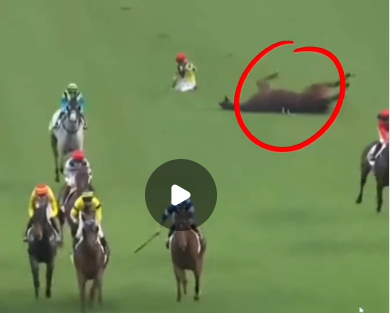
(In November 2022, the horse “Fantastic Way” was euthanized after falling and breaking its leg at the Sha Tin Racecourse in Hong Kong. Photo source: Screeshot from a hongkongv video in Instagram)
PETA’s signature campaign urging the Egyptian government to end tourist cycling activities in The Year of the Horse signifying freedom and vitality
The aforesaid PETA news article states that while the Year of the Horse symbolises freedom and vitality, horses used for racing are deprived of their autonomy; they are drugged, whipped and oppressed to the point of physical collapse. Horses are naturally sensitive, fond of roaming freely, forming social bonds and grazing all day, but horses working in the tourism industry are often left alone, restrained, overworked and do not receive proper medical care.
The organisation has launched a signature campaign urging the Egyptian government to end animal riding activities at the pyramid tourist sites.
